Global outlook and forecasts for the second quarter of 2026
Finance
Report

The beginning of 2026 unfolded in continuity with the dynamics observed at the end of 2025, characterized by the central role of investments in artificial intelligence and by economic growth that remains positive, albeit slowing. However, significant uncertainties persist regarding the sustainability of profitability models, particularly in the software and private credit segments, which have started to be reflected in market valuations.
The outbreak of the conflict in the Middle East between the United States and Iran has led to a marked deterioration in the overall outlook. The closure of the Strait of Hormuz has generated a significant supply shock across energy markets and several strategic commodities, with widespread effects on inflation, global supply chains, and growth prospects, disproportionately affecting Europe due to its greater sensitivity to energy costs.
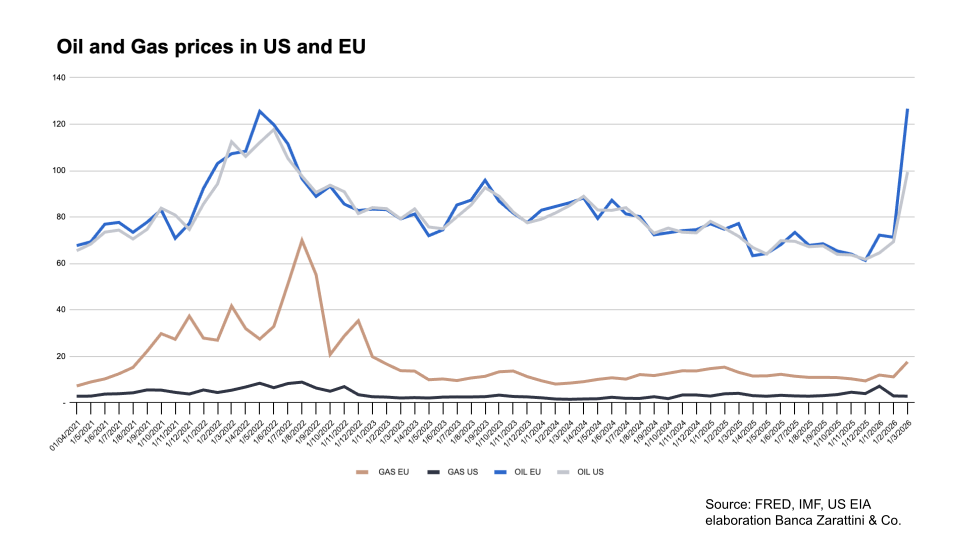
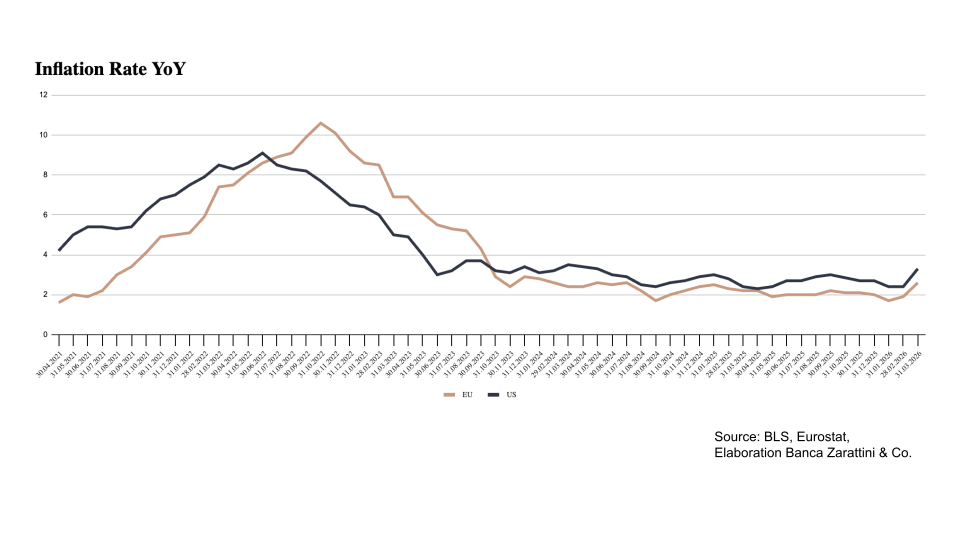
The rise in energy prices has had a substantial impact on inflation expectations, prompting markets to reassess the monetary policy outlook. Expectations of a more accommodative stance by the Federal Reserve have been scaled back, while in Europe the risk of a more restrictive approach has increased. In this context, governments’ fiscal responses will be crucial in preventing more persistent inflationary pressures.
Markets reacted with a broad-based reduction in risk exposure, without showing signs of systemic stress. On the equity side, a rotation toward more defensive sectors and those linked to real-economy investments—such as energy, infrastructure, and defense—was observed, while the technology sector, particularly software, showed greater weakness. In fixed income markets, inflationary pressures mainly penalized the short end of the yield curve.
Global growth prospects have been revised downward, although they remain in positive territory. Emerging economies and Europe appear more exposed to the energy shock, while the increased resilience of the global economic system compared with past shocks helps to contain the most severe effects on the business cycle.
The year 2026 is shaping up to be characterized by elevated uncertainty and a strong dependence on geopolitical and energy-related developments. In this environment, a prudent yet flexible approach appears appropriate, based on a balanced allocation across geographies, styles, and market capitalizations, as well as selective exposure to long-term structural trends that continue to offer attractive opportunities despite the complexity of the cycle.